World Children's Day: Every child affected by TB has a right to prevention and treatment!
World Children’s Day, celebrated annually on 20th November, is marked as a global day of action led by UNICEF to promote and advocate the Convention on the Rights of the Child. This day serves as a platform to amplify the children's voices to be the agents of change and shape a better world. One of the key areas for continued improvement is health, which is reflected in more children surviving to celebrate their fifth birthday in today’s world. Despite the progress, millions of children still suffer and die prematurely from preventable causes, including communicable diseases like tuberculosis (TB).
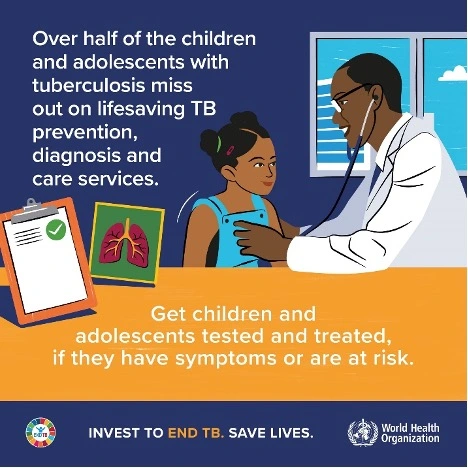
In 2022, an estimated 1.25 million children and young adolescents fell ill and 214,000 died from TB, which means that each day, almost 600 children and young adolescents lose their lives to this preventable disease. Usually, contact tracing followed by treatment for infection or disease is at the household level, assuming that children and adolescents are infected at home by another household member. Data increasingly suggest that many are infected outside the home, calling for additional interventions to find children and adolescents with TB infection or disease to treat, support and care for them.
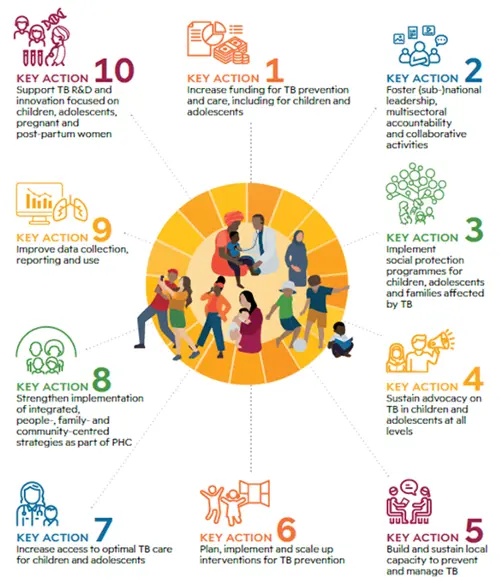
To reduce this burden of TB morbidity and mortality in children and adolescents, the WHO consolidated guidelines on tuberculosis include a shorter, 4-month treatment regimen (4HRZE), which simplifies treatment and improves adherence. New diagnostic tools are on the verge of being available. Child-friendly diagnostic tools such as non-invasive urine tests, stool tests, and tongue swabs are currently being tested – all making TB diagnosis and treatment more accessible, effective, and acceptable for children. In alignment with this guideline, The World Health Organization (WHO) has launched a roadmap towards ending TB in children and adolescents and outlines 10 key actions.
Various initiatives are shaping TB notification, prevention and treatment programmes around the world. IRD Bangladesh, for example, has contributed to a 2.65 times rise in Childhood TB notifications in Mymensingh, Bangladesh within 2 years period by engaging community leaders and public and private stakeholders and now planning to scale up, which links back to WHO consolidated guidelines and key actions. Overall, although during the COVID-19 pandemic, the focus on TB among children and adolescents diminished, recent data indicate a positive rebound, with notifications in this age group reaching the highest number ever reported.
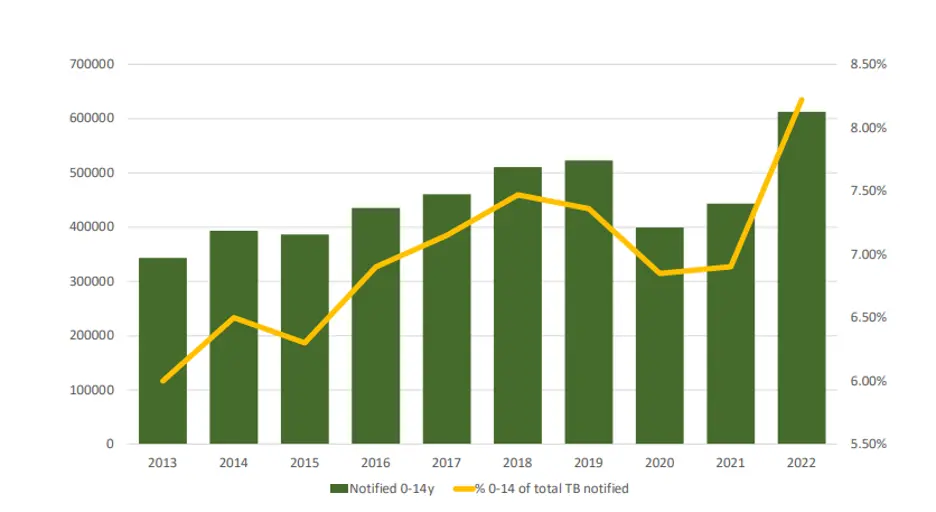
Trends in case detection in children and young adolescents (<15 years), 2013-2022
With this year's celebration of World Children’s Day, keeping up this momentum is crucial to end TB among children and adolescents as no child should have to endure this experience as Ciara Goslett (WHO page), a young MDR TB survivor from South Africa said: “Over 1 million children and young adolescents get sick with TB every year. I don’t want them to go through the painful experience that I went through. I call on world leaders to act now and invest in implementing the most recent TB guidelines in their countries as fast as possible!”