Private care providers should just refer all their symptomatic clients to the public sector
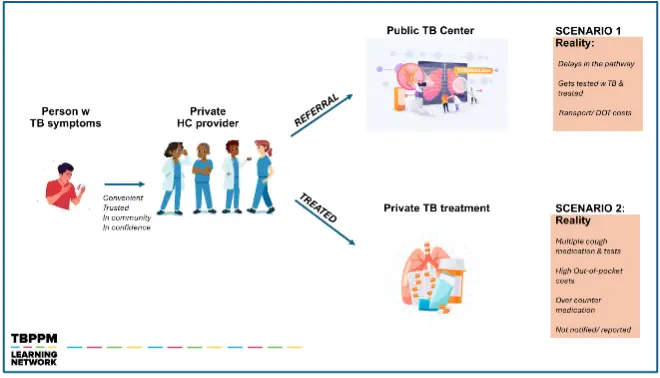
On Friday, December 6th, the TBPPM Friday Forum hosted a debate on the topic “Private care providers should just refer all their symptomatic clients to public sector….”. As a background of this debate, it has been observed that, in high-burden settings, individuals with tuberculosis symptoms often seek initial care from private providers, such as pharmacies, village doctors or workplace clinicians. Ideally, these encounters should lead to seamless referrals to public healthcare providers for specialized TB care, which is often free of cost and endorsed by the National TB programs. However, this pathway is frequently complicated by barriers such as limited access, convenience challenges, financial loss, stigma, and mistrust, leading to delayed diagnosis, incomplete treatment, or, in some cases, no treatment at all. Moreover, when private providers decide to provide care packages for TB, it often leads to partial coverage of the treatment and high out-of-pocket costs along with a lack of reporting in the national TB database. Addressing these issues requires robust public-private partnerships and successful stories of PPM collaborations around the world encouraged this debate to dig deeper.
During the forum, experts explored these challenges and debated the behaviors and attitudes of both private and public providers that obstruct effective collaboration.
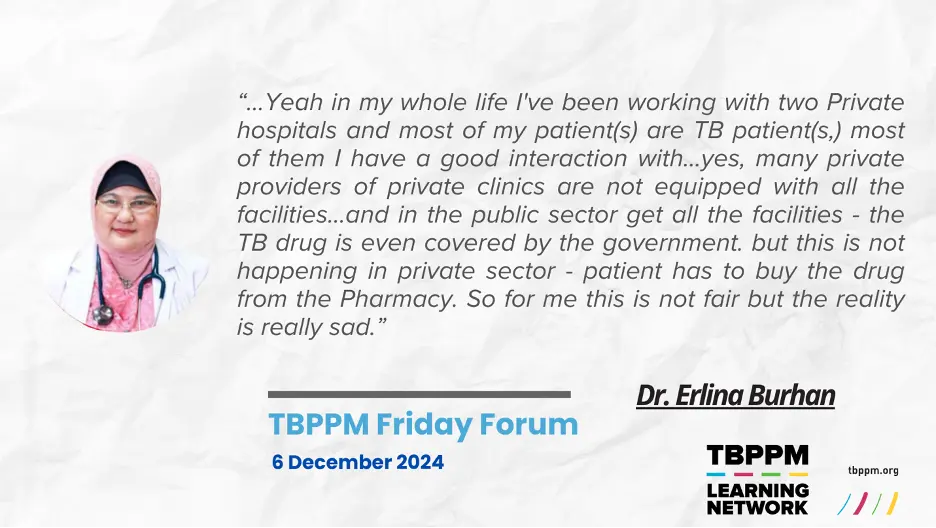
The discussion on the Public-Private Mix (PPM) for TB care emphasized the challenges and opportunities in integrating private sector engagement with national TB programs. A significant issue identified was the disparity in resources between public and private healthcare facilities. While public facilities benefit from government support, including free TB drugs and advanced diagnostic tools, private facilities often lack similar resources. This imbalance forces many patients in private care to incur out-of-pocket expenses, creating inequities in access to treatment.
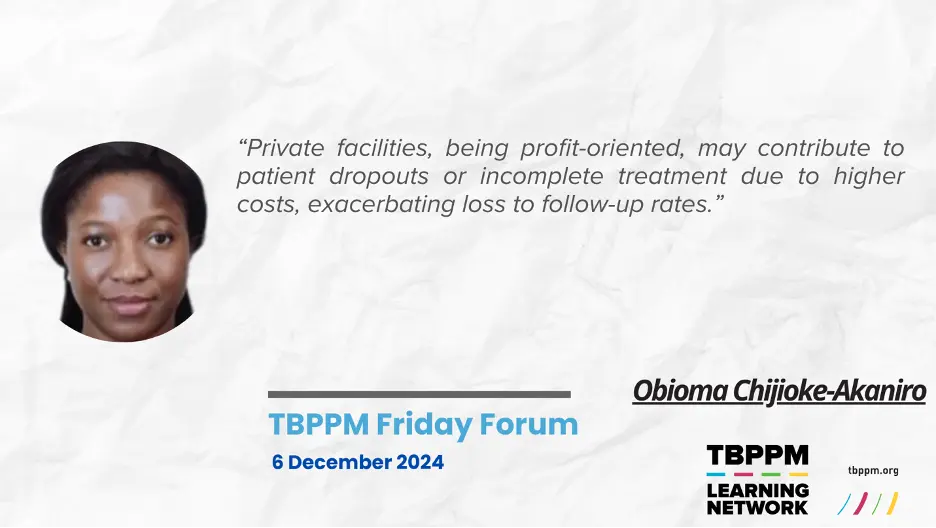
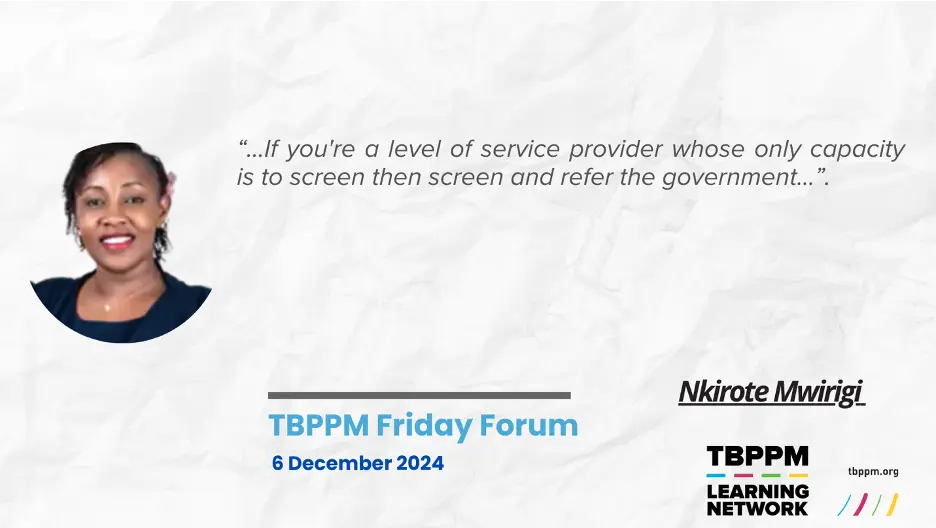
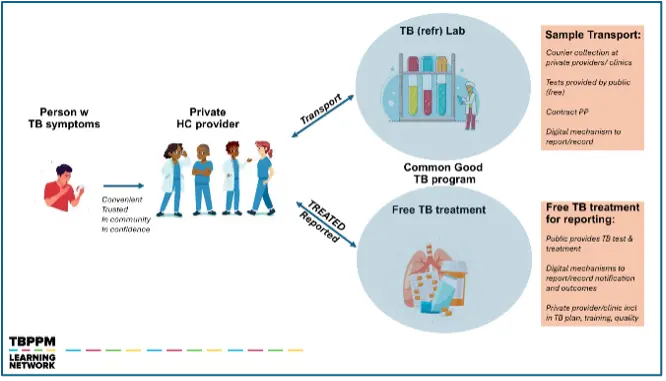
The conversation also touched on the profit-oriented nature of private healthcare, which can lead to higher costs and contribute to patient dropouts or incomplete treatments. Despite these challenges, the private sector was acknowledged as a critical supplement to public healthcare, helping to expand TB care coverage. However, participants agreed that private facilities should focus on providing comprehensive care only if adequately equipped; otherwise, they should prioritize screening and referring patients to public facilities, where a broader range of services is available.
Collaboration and trust between private providers and the government were highlighted as essential for improving patient-centered care. A task-sharing approach was suggested, where private providers handle initial screenings and referrals while public facilities provide advanced care. To ensure equitable and effective TB treatment, both sectors must prioritize a patient-centered approach, reducing out-of-pocket costs and delivering personalized care. The discussion concluded with a call for strengthened collaboration between public and private sectors to address challenges and deliver people-centered solutions to TB care.