Private sector contributions towards Universal Health Coverage
|
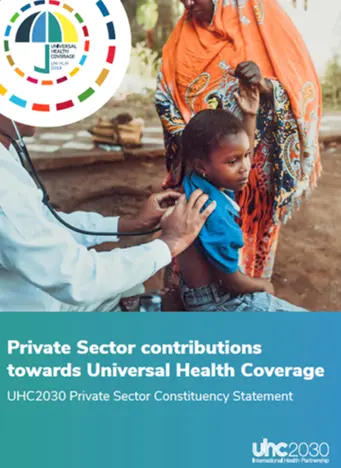
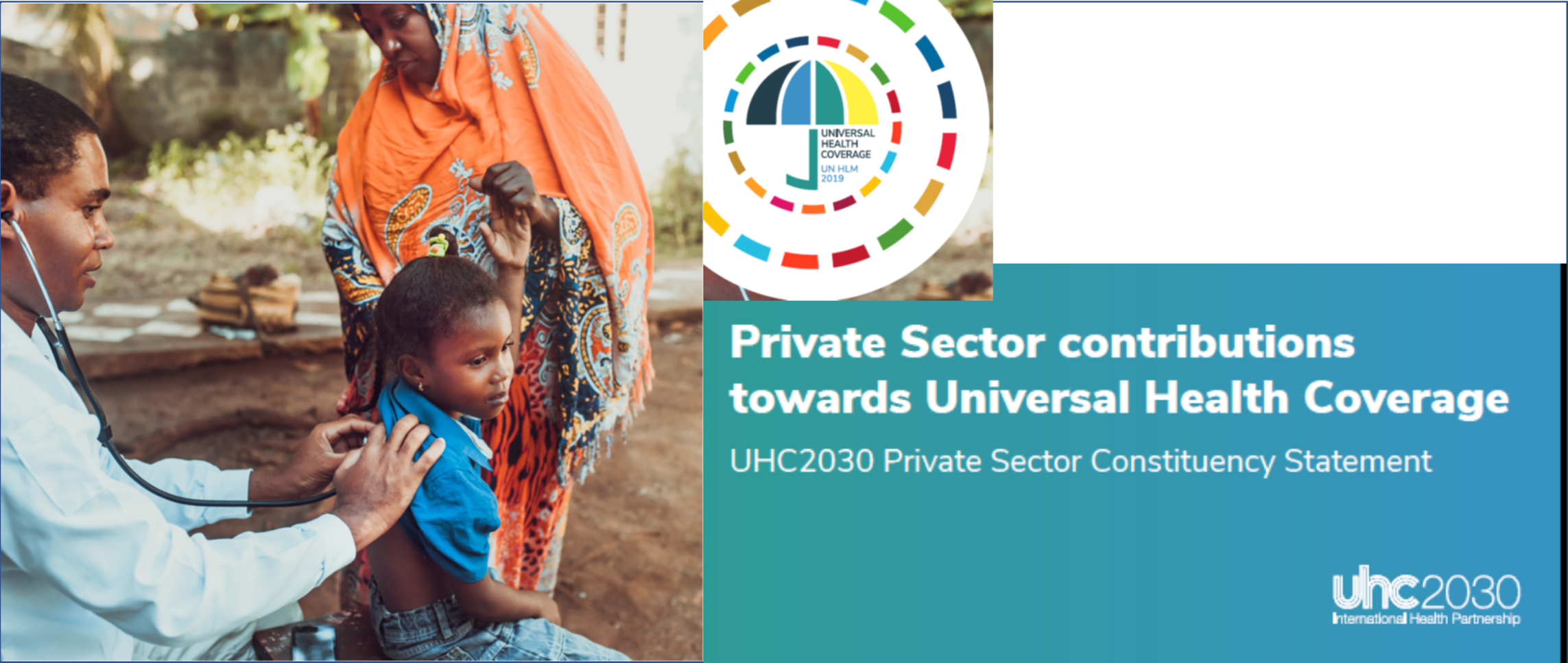
Private Sector contributions towards Universal Health Coverage This statement highlights how the private sector can effectively contribute to UHC and work together with other stakeholders to achieve better health and well-being for all people at all ages. At least half the world’s population still lacks access to essential health services, and almost 100 million people are pushed into extreme poverty each year by the costs of essential healthcare. Universal Health Coverage (UHC) means that all individuals and communities have access to quality essential health services without risk of financial hardship. As part of the broad and ambitious agenda for a safer, fairer and healthier world by 2030, the Sustainable Development Goals (SDGs) include a specific goal to ensure healthy lives and well-being for all people at all ages, and a specific target to achieve UHC. The private sector is well-positioned to contribute to the UHC effort and already provides health products and services for many millions of people and communities globally. Most countries have mixed (public and private) health systems. The for-profit private sector offers a diverse range of health and related products, services, and innovation. It provides over 60% of health services in some countries. |
The private sector and universal health coverage (2019) WHO Bulletin
The sustainable development goals (SDGs) of Transforming our world, the 2030 agenda for sustainable development, 1 and specifically SDG 17, call for cooperation, collaboration and partnership between government, civil society and businesses. To reach the agenda’s objectives, the international community needs to find ways to effectively harness the public and private sectors. |
|
|
|