
“If we cannot find TB, we cannot treat TB. And if we cannot treat TB, we cannot end TB”
Diagnosis is the weakest aspect of tuberculosis (TB) care and control, in both public and private health sectors.
Recognizing this, the WHO Global TB Program released the first-ever standard for TB diagnostics, titled "WHO standard: Universal access to rapid tuberculosis diagnostics". This sets a standard for country programs to follow in order to close access gaps to rapid TB diagnostic testing and increase rates of diagnosis and linkage to treatment.
The Standard recommends using molecular diagnostics as the primary testing method, but only 38% of all notified cases in 2021 were initially tested with a WHO-recommended rapid molecular diagnostic. Additionally, only 63% of all notified TB cases were confirmed through any testing method. Of the individuals with confirmed TB, only 70% were screened for rifampicin resistance, as recommended by the WHO. Below, we have summarized two recent reports that outline key steps to be taken to close the gap in access to diagnosis.
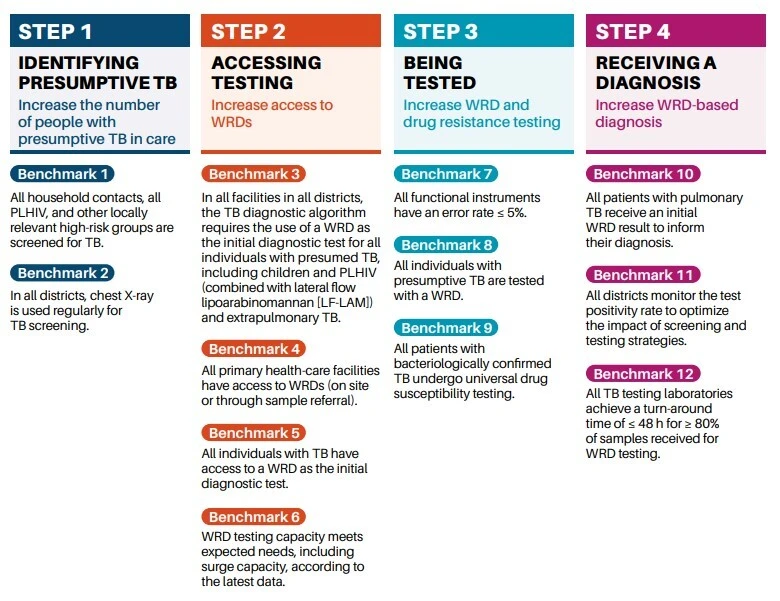
The standard outlines 12 benchmarks (Figure 1) that cover the four steps of the diagnostic cascade, which are Identifying presumptive TB, Accessing testing, Being tested, and Receiving a diagnosis. These benchmarks are categorized based on the four steps of the diagnostic cascade and specify indicators for measuring access gaps and monitoring progress toward closing them. It is recommended that country programs track these indicators and make data on gaps and progress publicly available to aid in targeted advocacy. Some of the core principles outlined in the Standard is that Diagnostic testing is equitable and should reach all levels of the health system and covers patients in private and other non-NTP sectors. Six of the 12 benchmarks (namely 1,4,5,8,9 and 10) also have specific applications in the non-NTP and private sector and should be included when those sectors contribute > 10% of the total notified burden. The Standard also recognizes that Integrating the public and private sectors is an important enabler to improve diagnostics.
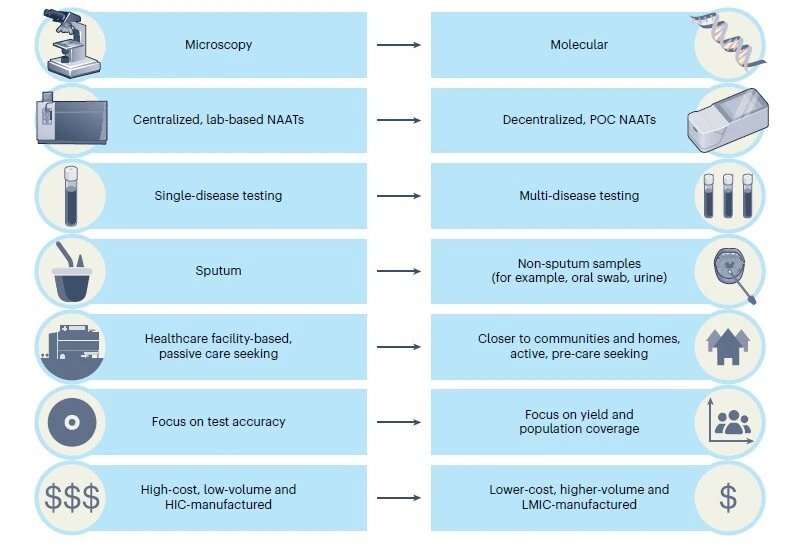
In a recent commentary for Nature, Pai M, Dewan P, and Swaminathan S have also outlined seven crucial transitions (Figure 2) that they argue are needed to transform how TB is diagnosed. As they put it, “If we cannot find TB, we cannot treat TB. And if we cannot treat TB, we cannot end TB.” They argue that the time is opportune to action the opportunities created by the COVID-19 pandemic and to call on the global TB community to make these transitions with urgency. (Pai M et al, 2023).
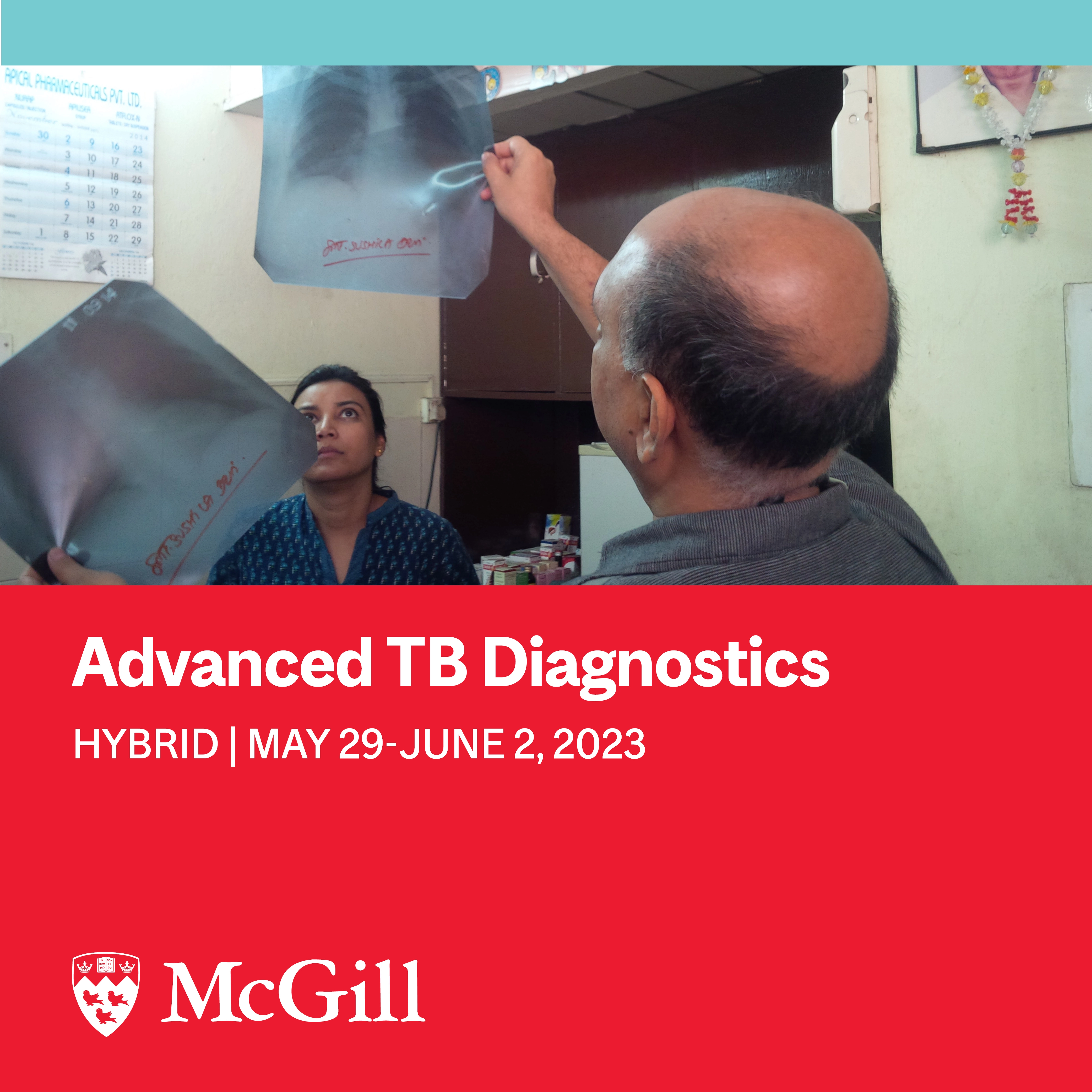
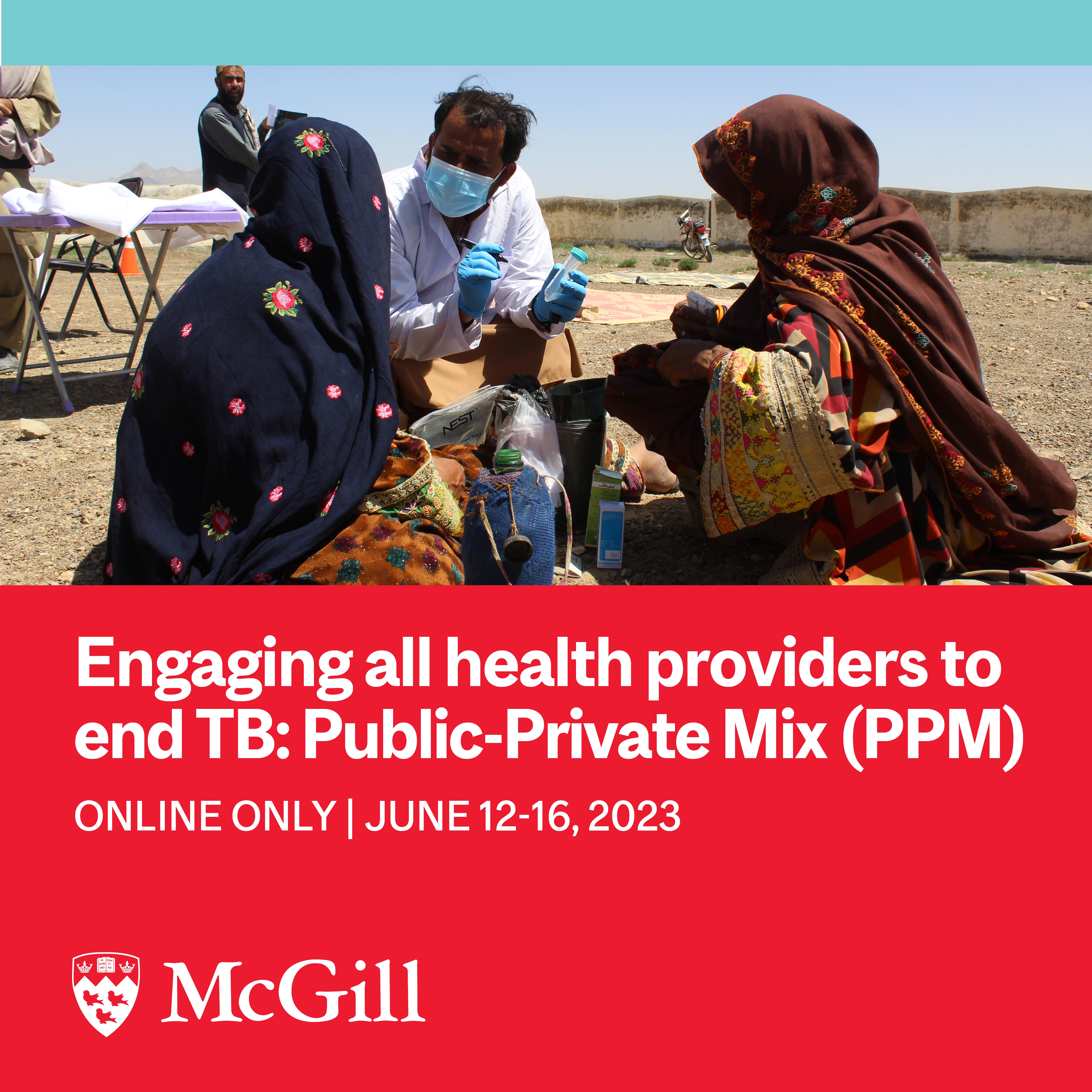
An Advanced TB Diagnostics course is scheduled for end of this month, with over 160 people registered for online or in-person participation. Another course on Engaging All Providers has over 70 people registered and online participation is still possible for both these courses.
 |
 |
These reports represent a significant step forward in the global fight against TB. They also address the crucial point of engaging private providers and primary care providers to close this gap in access to TB diagnosis. By collaborating with private providers, we can expand access to rapid TB diagnosis and improve treatment rates for all those affected. With a continued commitment to innovation, collaboration, and equity, we can move closer to realizing the goal of a TB-free world.